The Current State of the U.S. Dollar: Navigating Economic Uncertainty
The U.S. dollar has long been the world's most dominant currency, representing global stability and trust. However, recent shifts in global economics, fiscal policies, and rising geopolitical tensions have placed the dollar in a vulnerable position. For non-resident Indians (NRIs), especially those with ties to both the U.S. and India, understanding these dynamics is crucial for wealth preservation and growth.
Dollar Strength and Weakness in 2024–25
As we move into September 2025, the U.S. dollar's trajectory is influenced by several interconnected factors. Historically, the dollar tends to strengthen when the U.S. economy is growing, inflation is under control, and global confidence remains high. However, recent trends indicate weakening, driven by several global and domestic pressures:
-
Inflation: Rising inflation in the U.S. has reduced the dollar's purchasing power, impacting consumers and investors alike. The Federal Reserve's attempts to curb inflation through interest rate hikes have made borrowing more expensive, which has slowed economic activity, especially in sectors like real estate and consumer spending.
-
Interest Rates and Debt: With the U.S. government’s debt surpassing $30 trillion, servicing this debt has become a growing concern. The Federal Reserve's aggressive rate hikes have made borrowing more costly, further adding to the fiscal burden. Higher rates can attract capital into the U.S. dollar but could also slow economic growth, leading to a potential recession risk.
-
Global Trade Realignments: The rise of BRICS countries (Brazil, Russia, India, China, South Africa) has also impacted the dollar’s dominance in global trade. These nations are increasingly moving away from using the U.S. dollar for international transactions, opting for their own currencies or the Chinese yuan. This shift is contributing to a gradual decline in the dollar’s global share.
For NRIs, these factors translate into both risks and opportunities. A weaker dollar could reduce the value of remittances and savings held in the U.S., while inflation and high-interest rates are eroding purchasing power. However, the global shift away from the dollar could present an opportunity for diversification into other currencies or assets.
U.S. Fiscal Policy and Debt Levels
The U.S. government’s escalating fiscal deficit and national debt are key challenges to the dollar’s strength. As the U.S. borrows to finance its deficits, the cost of servicing the debt rises, particularly as interest rates increase. This fiscal burden could lead to more volatility in the dollar, further increasing global economic uncertainty.
Recent estimates by Goldman Sachs and J.P. Morgan point to an increased chance of a recession in the U.S. within the next 12-18 months, as high interest rates, inflation, and global trade tensions continue to impact the economy. This economic slowdown could weigh heavily on the dollar’s value, causing further volatility in foreign exchange markets.
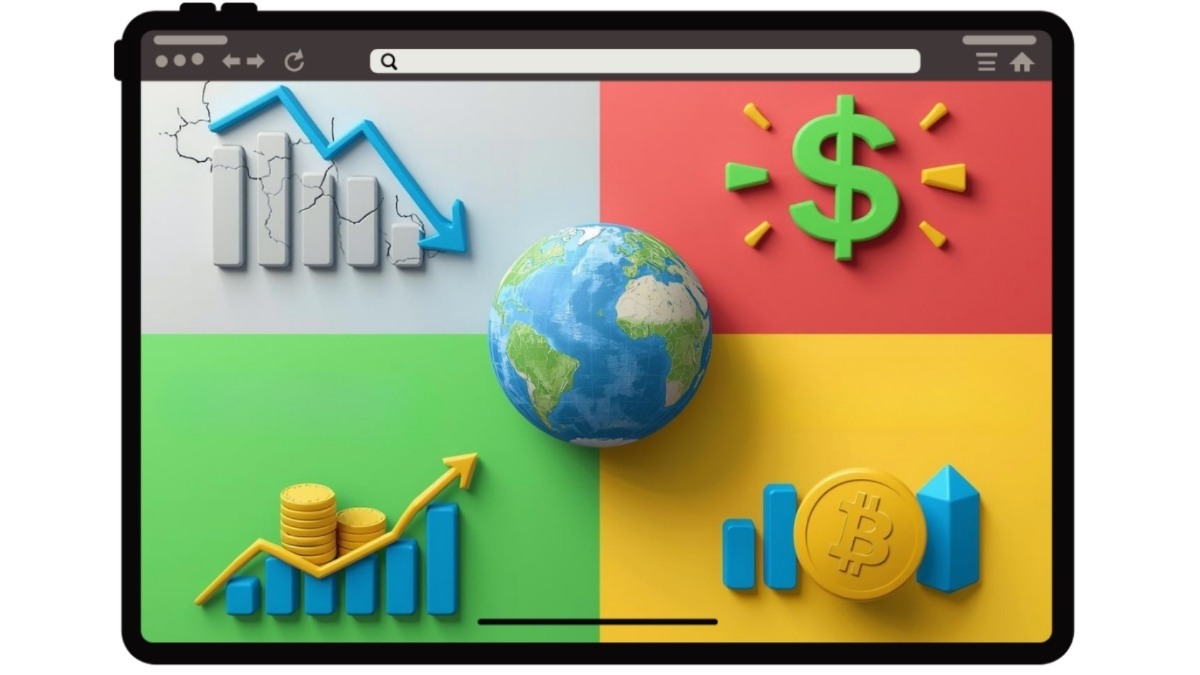
Risks and Uncertainties Ahead: What’s Next for the Dollar and NRIs?
As we look ahead, several economic risks threaten to destabilize the dollar and create further uncertainty. This includes the potential for a recession, inflationary pressures, and global geopolitical tensions.
The Risk of a U.S. Recession
A U.S. recession remains a real concern for the remainder of 2025 and possibly into early 2026. Economists at Goldman Sachs, J.P. Morgan, and UBS have raised their recession probability estimates to 45%-60%, citing factors like rising interest rates, inflation, and increasing fiscal pressures. Additionally, a slowdown in consumer spending and business investment suggests a challenging economic environment ahead.
For NRIs, the risk of a U.S. recession impacts their financial landscape in several ways:
-
Dollar Depreciation: A weaker dollar could reduce the value of remittances sent to India, which is particularly important for NRIs who rely on sending money back home.
-
Lower Asset Values: If the U.S. enters a recession, the value of U.S. assets, including stocks and real estate, could see a significant downturn, affecting the value of investments held in the U.S.
Geopolitical Risks and Dollar Volatility
Ongoing geopolitical tensions, particularly with Russia and China, further add to the instability of the dollar. The rise of the BRICS alliance and their increasing use of non-U.S. currencies for trade is a direct challenge to the dollar's supremacy in global markets. This de-dollarization movement could continue to undermine the dollar’s strength, impacting international investors—including NRIs—who hold significant amounts of wealth in U.S. dollars.
For NRIs, these risks underscore the importance of diversifying their portfolios and exploring assets that are less correlated with the dollar.
Alternative Investment Strategies for NRIs: Securing Your Wealth
In the face of economic uncertainty, NRIs should focus on diversifying their investment portfolios to hedge against the risks posed by a volatile U.S. dollar. Below are some alternative assets to consider:
Gold: The Safe-Haven Asset
Gold has long been a hedge against inflation and currency devaluation. As the U.S. dollar weakens and inflation continues to rise, gold remains one of the safest investments for preserving wealth. Historically, gold has provided a 10-year compound annual growth rate (CAGR) of about 6%, making it a reliable store of value.
For NRIs, gold provides the added benefit of being a globally accepted asset, not tied to the U.S. dollar. Whether through physical gold, gold ETFs, or gold bonds, investing in gold can offer protection against currency fluctuations and inflation.
Real Estate: A Resilient Asset Class
Real estate remains a cornerstone of investment for many NRIs. In the U.S., the real estate market faces challenges from rising mortgage rates and a potential housing slowdown. However, in India, the real estate market has shown resilience, particularly in emerging cities like Hyderabad, Bangalore, and Pune, where demand for housing remains robust.
India’s real estate market is valued at over $650 billion, with 8-10% annual growth projections through 2026. Government initiatives like PMAY (Pradhan Mantri Awas Yojana) and RERA (Real Estate Regulatory Authority) have bolstered transparency and improved buyer confidence.
For NRIs, investing in Indian real estate offers a unique opportunity to tap into a growing market with high returns, especially in the residential sector. Platforms like RealtyBlocks provide AI-powered tools like PropGauge™ for real-time property valuations and WealthFlow™ to track investment portfolios, enabling NRIs to make data-backed decisions.
Global Diversification: Equity Indices, ETFs, and Bonds Outside the U.S.
To mitigate the risks associated with the U.S. dollar, NRIs should consider global diversification. Investing in international equity indices, ETFs, and bonds allows NRIs to reduce exposure to U.S. dollar fluctuations and gain exposure to markets with more favorable economic conditions.
Global equity indices such as the FTSE 100 or Nikkei 225 offer promising opportunities in stable markets. International bond funds can provide lower volatility and more attractive returns, especially from countries with lower debt burdens.
Digital Assets: Bitcoin and Stablecoins
Cryptocurrencies like Bitcoin have emerged as alternative assets that NRIs can consider for diversification. Bitcoin’s decentralized nature and limited supply make it an attractive hedge against fiat currency devaluation.
For NRIs, stablecoins (cryptocurrencies pegged to fiat currencies like the U.S. dollar) offer a less volatile alternative, providing diversification within the digital asset space. However, cryptocurrencies should only form a small, speculative portion of an NRI’s portfolio due to their inherent volatility.

The India-U.S. Connection: Balancing Exposure Across Two Economies
NRIs are in a unique position, balancing exposure to both the U.S. and Indian economies. While the U.S. market offers stability and liquidity, India presents significant growth opportunities in sectors like technology, infrastructure, and real estate.
By adopting a diversified approach to investments across both markets, NRIs can ensure stability and growth while managing the risks associated with currency fluctuations and economic volatility. RealtyBlocks provides a platform that empowers NRIs to manage investments in Indian real estate, with verified listings, real-time property insights, and AI-driven portfolio management tools.
Actionable Guidance: Building a Strong Portfolio
-
Conservative Strategy: Focus on gold, government bonds, and Indian real estate for long-term wealth preservation.
-
Moderate Strategy: Invest in a mix of Indian real estate, global equity indices, and digital assets like Bitcoin.
-
Aggressive Strategy: Embrace higher-risk, higher-return assets like tech stocks, foreign bonds, and cryptocurrencies, alongside strategic real estate investments in India and the U.S.
Liquidity Considerations: Ensure a portion of your portfolio is in highly liquid assets, such as equities or ETFs, to manage sudden economic shifts or opportunities.
Compliance and Documentation: NRIs should ensure compliance with Indian laws such as RERA, RBI, and FEMA when investing in India.
Conclusion: Preparing for the Future
As global economic uncertainty grows, NRIs must take proactive steps to protect and grow their wealth. By diversifying into gold, real estate, global assets, and digital currencies, NRIs can safeguard their portfolios against the challenges posed by a volatile U.S. dollar.
RealtyBlocks offers the tools NRIs need to make informed, data-backed investment decisions in Indian real estate, ensuring their wealth is well-protected in an unpredictable world.